
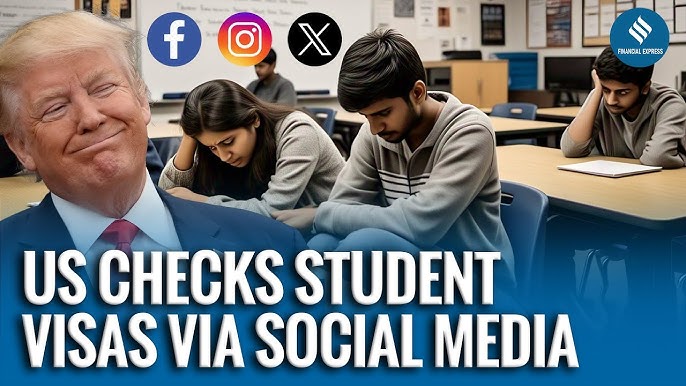
Picture this: You are standing in that long, winding line at customs. The air is stale, the fluorescent lights are humming, and your heart is doing that nervous little tap dance in your chest. You have your passport, your visa, and your neatly folded admission letter. You are ready. But while you are worrying about whether your smile looks too forced, the officer isn’t just looking at your face; they might be looking at your tweets from 2018.
Welcome to the new digital border. It is invisible, it is invasive, and frankly, it is the elephant in the room that nobody wants to talk about.
In the last decade, we have watched the immigration landscape shift from a paper-pushing bureaucracy to a high-tech surveillance grid. As a journalist who has covered the tech-policy beat for years, I’ve seen the trends swing wildly, but nothing has been as game-changing as the rise of social screening for visa immigration. It is no longer just about who you say you are on a government form; it is about who your digital footprint says you are when you think no one is watching.
The “Digital DNA” of Modern Border Control
I remember a conversation I had with an immigration attorney last year—let’s call her Sarah. She told me about a client, a brilliant software engineer, who was pulled into a secondary inspection room not because of a criminal record, but because of a misunderstood meme in a WhatsApp group. That is the terrifying reality we are dealing with.
Social screening for visa immigration has evolved from a manual “spot check” to a sophisticated, data-driven mandate. Agencies like the USCIS and the Department of State aren’t just glancing at your application; they are requiring you to list your social media handles on forms like the DS-160. They are peeling back the layers of your online presence to assess your character, your integrity, and yes, your eligibility to enter the country.
The Pop Quiz Nobody Studied For: Social Screening for Students
Now, let’s talk about the students. If you are an F-1 visa applicant or a hopeful study-abroad candidate, you might think your biggest hurdle is the SATs or the GREs. Think again. Social screening for students is becoming the silent killer of academic dreams.
Universities are melting pots of political activism, free speech, and—let’s be honest—dumb jokes. But in the eyes of a rigid automated vetting system, a photo of you at a campus protest or a sarcastic tweet about foreign policy can look like a security threat. I’ve seen bright kids lose their scholarships and their visas because an algorithm flagged their digital identity as “high risk” based on context it couldn’t possibly understand.
It is heartbreaking, really. You spend years building a resume, only to have it torched by a 280-character thought you posted when you were angry at the world.
What Are They Actually Looking For?
So, what is the red flag? Is it that photo of you holding a red solo cup? Probably not (unless you are underage). The authorities are hunting for deeper issues during visa vetting processes:
- Radicalization or Violence: Any hint of sympathy towards extremist groups.
- Intent to Overstay: This is a big one. If you are posting about “never coming back” to your home country, you are practically handing them a reason to deny you.
- Inconsistencies: Does your LinkedIn say you were working in Mumbai while your Instagram shows you partying in Tulum? Discrepancies breed suspicion.
The Future is AI (And It Doesn’t Get Sarcasm)
Looking ahead to 2026, the trends are clear. We are moving away from human officers scrolling through Facebook feeds and toward AI-driven background checks. This brings a mixed bag of emotions. On one hand, it’s faster. On the other hand, artificial intelligence is notoriously bad at understanding human humor.
Future social screening for visa immigration systems will likely use “Predictive Vetting.” They won’t just look at what you did post; they will analyze your network, your likes, and your behavior patterns to predict what you might do. It sounds like science fiction, but the technology is already here.
How to Protect Your American Dream
Look, I’m not saying you need to delete your entire internet existence. That actually looks suspicious—like a house with no furniture. But you need to be smart. Treat your social media like a job interview that never ends.
If you are facing social screening for students or work visas, run a personal audit. Scroll back. Way back. Look at your content through the eyes of a humorless bureaucrat who doesn’t know you. If a post requires a five-minute explanation to prove it’s a joke, delete it.
The Bottom Line
The border doesn’t end at the airport anymore; it extends to the phone in your pocket. Social screening for visa immigration is the new standard, and it is here to stay. Whether you are a student, a skilled worker, or a globetrotter, your digital reputation is now your most valuable travel document.
So, keep it clean, keep it authentic, and for heaven’s sake, think before you tweet. Your future self will thank you.
