
Technology Teams Face Constant Change
Technology never slows down.
New tools appear every month. AI systems improve weekly. Security threats evolve constantly. Client expectations shift fast.
Teams that cannot adapt fall behind quickly.
A World Economic Forum report found that 44% of worker skills are expected to change within five years. Another study showed that more than 70% of technology leaders say adaptability is now more important than technical expertise alone.
This shift changes how successful teams operate.
The best teams are no longer the teams that know everything already.
They are the teams that learn fastest.
Why Technical Skill Alone Is Not Enough
Knowledge Expires Faster Than Ever
A programming language that feels essential today might lose relevance in a few years.
Frameworks change. Workflows change. Customer demands change.
Teams must keep evolving.
“One client suddenly requested AI-assisted features we had never implemented before,” a team shared. “We had to learn new workflows quickly while still delivering on schedule.”
That situation is becoming normal across the industry.
Adaptability Reduces Panic
Technology projects rarely go exactly as planned.
Deadlines shift. Requirements change. Systems break unexpectedly.
Rigid teams struggle under pressure.
Adaptable teams adjust faster.
A team shared one example.
“A project changed direction halfway through development because the client’s business priorities shifted. Instead of resisting the change, we reorganised tasks within two days and kept moving.”
Flexibility protects momentum.
The Fastest Teams Usually Learn the Fastest
Learning Speed Creates Competitive Advantage
Technology rewards fast learners.
Teams that adopt useful tools early often gain major advantages.
This includes:
- AI workflows
- Automation tools
- Testing systems
- Communication platforms
Learning quickly improves efficiency.
Curiosity Beats Comfort
Comfort zones become dangerous in technology.
People who stop learning slowly become outdated.
A LinkedIn report found learning ability is now one of the most valuable workplace skills across the technology industry.
Curious teams improve continuously.
Adaptability Improves Problem-Solving
Unexpected Problems Happen Constantly
Every technology project faces surprises.
Servers fail. Requirements change. Bugs appear before release.
Adaptable teams solve problems faster because they stay calm under pressure.
“One deployment failed late at night before a major release,” a team shared. “Instead of blaming each other, the team split responsibilities immediately. One group handled debugging while another communicated with the client.”
That flexibility prevented larger damage.
Adaptable Teams Recover Faster
Mistakes happen.
Strong teams recover quickly because they adjust instead of freezing.
A rigid process can slow recovery.
Flexible teams move faster.
Communication Helps Teams Adapt
Information Must Move Quickly
Fast-changing projects require strong communication.
Without clear updates:
- Teams duplicate work
- Priorities become unclear
- Small mistakes become expensive
Poor communication destroys adaptability.
Honest Feedback Speeds Up Learning
Adaptable teams encourage honesty.
People must feel comfortable saying:
- “This process is not working.”
- “We need a better solution.”
- “I do not understand this yet.”
“One junior developer questioned part of a workflow during a meeting,” a team shared. “At first it seemed minor. Later we realised the process was slowing down the entire release cycle.”
Questions improve systems.
Adaptability Matters Even More in Remote Teams
Remote Work Changed Team Dynamics
Technology teams now operate across countries and time zones.
This creates challenges:
- Communication delays
- Different work styles
- Coordination issues
Adaptable teams handle these differences better.
A report found that over 50% of remote workers struggle with communication and workflow alignment.
Strong adaptable teams solve these issues through structure and flexibility.
Flexible Teams Handle Change Better
Some clients prefer detailed updates. Others want independence.
Some projects move quickly. Others require careful planning.
Adaptable teams adjust communication styles based on the situation.
AI Has Increased the Need for Adaptability
AI Is Reshaping Workflows Fast
AI tools now assist with:
- Coding
- Testing
- Documentation
- Research
- Support workflows
This changes daily work rapidly.
Teams that ignore these tools risk falling behind.
Adaptation Does Not Mean Chasing Every Trend
Smart teams stay selective.
Not every new tool matters.
“One company tried adopting too many new tools at once,” a team shared. “Developers spent more time learning systems than actually building products.”
Adaptability means evaluating change carefully.
Not blindly following hype.
Strong Culture Supports Adaptability
Fear Blocks Innovation
Teams afraid of mistakes avoid experimentation.
That slows improvement.
Healthy culture encourages testing ideas safely.
People learn faster when they are not terrified of failure.
Burnout Reduces Flexibility
Exhausted teams adapt poorly.
Stress narrows thinking.
A study showed burnout affects more than 60% of technology workers, especially during periods of constant change.
Rest matters.
Balanced teams solve problems better.
Rootstack Panama Learned Adaptability Through Growth
Companies like Rootstack panama experienced this firsthand while expanding internationally.
“What worked when we were a small local team stopped working once projects became larger and clients became more demanding,” a team shared. “We had to improve workflows, communication, and documentation very quickly.”
That pressure created stronger systems.
Adaptation became necessary for survival.
How Technology Teams Can Become More Adaptable
Build Learning Into Daily Work
Do not treat learning as something extra.
Encourage:
- Short workshops
- Tool testing
- Knowledge sharing
- Weekly improvement discussions
Small learning habits create long-term growth.
Keep Processes Flexible
Processes should guide teams.
Not trap them.
Rigid systems slow adaptation.
Review workflows regularly.
Improve them continuously.
Encourage Cross-Training
Teams become more resilient when people understand multiple areas.
Cross-training reduces dependency on single individuals.
It also improves collaboration.
Reward Problem-Solving
Adaptable behaviour should be recognised.
Celebrate:
- Initiative
- Learning
- Creative fixes
- Process improvements
This reinforces strong habits.
Common Mistakes That Hurt Adaptability
Overcomplicating Systems
Too many layers slow teams down.
Simple systems adapt faster.
Punishing Mistakes Too Harshly
Fear reduces experimentation.
Learning requires room for failure.
Ignoring Feedback
Frontline employees often spot problems first.
Good leaders listen carefully.
Resisting Change Automatically
Not every old process deserves protection.
Teams should evaluate systems honestly.
Adaptability Creates Long-Term Stability
Flexible Teams Handle Uncertainty Better
Technology will continue changing.
AI will evolve. Security risks will shift. Customer expectations will rise.
Adaptable teams survive these changes.
Rigid teams struggle.
Adaptability Builds Confidence
Teams become more confident after handling change repeatedly.
Experience creates resilience.
That resilience matters during difficult projects.
Final Thoughts: Adaptability Is the New Core Skill
Technology changes too fast for fixed thinking.
The strongest teams today are not always the most experienced.
They are often the teams most willing to:
- Learn
- Adjust
- Experiment
- Improve continuously
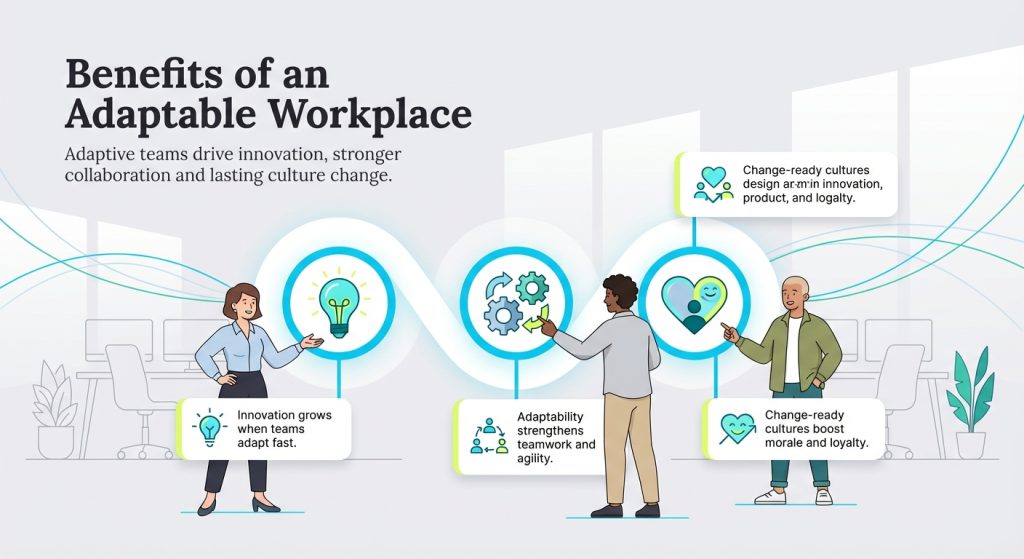
Adaptability improves:
- Problem-solving
- Communication
- Innovation
- Team resilience
- Long-term growth
Technology rewards movement.
Teams that keep evolving stay ahead.
