
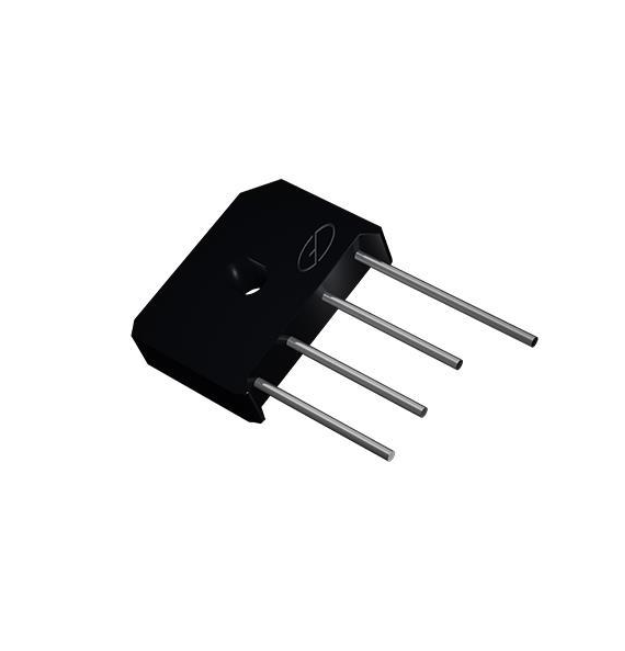
Reliable power conversion is an important part of modern electronic design. Many devices use alternating current (AC) from a power source but need direct current (DC) to operate. Standard bridge rectifiers help solve this problem by converting AC into pulsating DC through a simple and widely used circuit arrangement. They are found in power adapters, household electronics, industrial control systems, battery charging circuits, and many other applications. For engineers and electronic component buyers, choosing the right rectifier is essential for building dependable and efficient power supplies.
Good-Ark offers standard bridge rectifiers across different package families to support a range of electronic design requirements. Its product category provides useful comparison details, including voltage ratings, current ratings, surge current, forward voltage, and temperature limits. These specifications help engineers narrow down suitable components before reviewing individual product information. With a focus on diode technology, product development, and long-term customer relationships, Good-Ark provides a starting point for professionals looking for rectifier components for everyday power conversion needs.
Understanding Standard Bridge Rectifiers and Their Function
A standard bridge rectifier is an electronic component that uses four diodes arranged in a bridge circuit to convert AC into pulsating DC. During each half-cycle of the AC input, two diodes conduct current while the other two block it. This arrangement allows the output current to flow in the same direction during both halves of the AC waveform. The result is full-wave rectification, which makes better use of the input waveform than half-wave rectification.
Although the output is not perfectly smooth DC, it can be filtered with capacitors and, when needed, regulated to provide a more stable voltage. Standard bridge rectifiers are popular because they offer a practical solution with a straightforward circuit design. They are used in low-voltage power supplies, control boards, lighting equipment, and general-purpose electronic products. When selecting a bridge rectifier, designers should consider the input voltage, expected load current, available cooling, and the performance required by the complete circuit. Understanding these basics makes it easier to compare Good-Ark rectifier options and identify components that fit the intended application.
Key Electrical Specifications to Compare
Electrical ratings are among the most important factors when choosing standard bridge rectifiers. The maximum repetitive reverse voltage indicates how much reverse voltage a rectifier can withstand under specified conditions. The average forward rectified current describes the current the component can handle when used within its rated operating limits. Designers should select suitable ratings based on the circuit’s normal operating conditions, expected voltage variations, and possible electrical transients. Choosing a component only because its current rating looks sufficient may lead to problems if the voltage, temperature, or surge requirements are overlooked.
Surge forward current is another important specification because a power supply can experience a brief current peak when it starts. For example, an initially discharged filter capacitor may draw a high current through the rectifier. Forward voltage drop also matters because it affects power loss and heat generation during conduction. In a typical bridge rectifier, current passes through two diodes at a time, so the combined forward voltage drop contributes to the overall power loss. Good-Ark’s catalog comparison fields help engineers review these characteristics together. Checking each rating against the component datasheet and the actual circuit conditions supports a more informed selection process.
Package Types, Thermal Limits, and Circuit Design
The physical package of a bridge rectifier affects how it can be mounted, connected, and cooled. Different package families may suit printed circuit boards, compact consumer products, or equipment that requires a particular mounting arrangement. Package dimensions, lead spacing, terminal layout, and polarity markings should be checked before selecting a replacement or creating a new circuit board. Even when two rectifiers have similar electrical ratings, they may not be interchangeable if their footprints or connection layouts differ.
Temperature limits are equally important because rectifiers generate heat as current passes through them. High ambient temperatures, limited airflow, and nearby heat-producing components can raise the junction temperature and reduce the available operating margin. Engineers should review the datasheet’s thermal resistance, derating guidance, and maximum junction temperature, where specified. Adequate copper area, sensible component spacing, and suitable ventilation can help manage heat. When evaluating Good-Ark standard bridge rectifiers, compare package information alongside current, voltage, surge, and forward voltage ratings rather than treating any specification in isolation. This approach helps ensure that the selected part suits both the electrical demands and the physical limits of the finished product.
Common Applications and Practical Selection Tips
Standard bridge rectifiers are used in many applications because AC-to-DC conversion is a basic requirement in electronic equipment. Examples include linear power supplies, small appliances, industrial control boards, instrumentation, and general-purpose DC circuits. They may also be used in transformer-based power supplies, where the rectifier converts the transformer’s AC output into pulsating DC before filtering and regulation. The exact rectifier required depends on the input waveform, load demand, operating environment, and design priorities. Applications involving high switching frequencies or demanding efficiency targets may require a different rectifier technology, so engineers should evaluate the complete circuit rather than assume that every standard bridge rectifier is suitable.
A practical selection process begins with the maximum input voltage and the expected DC load current. Next, check surge current capability, forward voltage drop, package dimensions, and thermal performance. Consider startup behavior, capacitor charging current, voltage spikes, and the possibility of overloads. Review the manufacturer’s datasheet for test conditions, electrical characteristics, and any restrictions that affect the published ratings. Good-Ark’s product category makes it easier to compare candidate components across different package families before moving to detailed product specifications. For procurement teams, this organized approach can also support component comparisons, design reviews, and replacement-part assessments. The goal is to select a rectifier that meets the application’s requirements without overlooking safety margins, compatibility, or long-term operating conditions.
Why Good-Ark Matters in Rectifier Selection
Good-Ark’s development reflects a long-term commitment to diode technology, teamwork, and customer relationships. The company describes a journey from a small factory to a recognized diode enterprise, built through the efforts of employees, suppliers, customers, and business partners. Its stated values place employee well-being and customer appreciation at the center of business development. This background provides useful context for customers exploring its semiconductor component portfolio and considering a supplier for their electronic design needs.
The company’s wider vision also emphasizes learning, responsibility, and cooperation. For engineers evaluating standard bridge rectifiers, the most important next step is to connect these broader company values with the technical information required for a specific project. Good-Ark’s catalog comparison fields can help users identify possible candidates, while individual product information should be used to verify exact ratings, package details, and operating conditions. Before finalizing a design or purchase, confirm the current datasheet, availability, and suitability of the selected part with the relevant product documentation or supplier contact. Careful evaluation helps engineers make decisions based on measurable requirements and build a stronger foundation for reliable electronic products.
Conclusion
Standard bridge rectifiers remain essential components in many everyday power supply designs. By converting AC into pulsating DC, they provide a simple and effective starting point for circuits used in consumer electronics, industrial equipment, and general-purpose power conversion. Selecting the right component requires more than checking a single current or voltage rating. Surge capability, forward voltage drop, package dimensions, thermal limits, and actual operating conditions all influence performance and reliability.
Good-Ark provides a catalog of standard bridge rectifiers in different package families, with comparison fields that help users review important electrical and thermal characteristics. Engineers and buyers can use this information to shortlist suitable parts and then consult individual product documentation for confirmation. By combining careful specification checks with sound circuit design practices, users can make more informed component choices for their applications. A thoughtful selection process supports dependable power conversion, efficient design decisions, and productive cooperation between component suppliers and their customers.
