
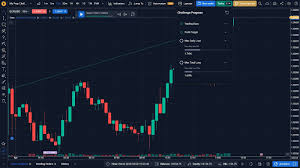
The global forex market continues to attract traders with its unmatched liquidity, 24-hour accessibility, and profit potential. However, navigating such a dynamic environment requires more than guesswork—it calls for structured insights, disciplined execution, and a sustainable trading approach. For aspiring traders who want to scale without relying solely on personal capital, leveraging a forex prop firm has become an increasingly popular path. Many traders, particularly those based in Asia, have discovered that the best prop firm in India gives them access to significant funding while allowing them to focus on refining their trading skills rather than worrying about account size limitations.
For beginners just entering the market, having a strong foundation is equally crucial. Educational resources on forex trading for beginners provide the tools to understand price action, risk management, and market structure—fundamentals that are indispensable before moving into advanced prop trading strategies.
Understanding Forex Market Analysis
Effective forex market analysis is the cornerstone of every profitable trading journey, whether executed through personal accounts or prop firms. Broadly, analysis can be broken down into three categories:
- Fundamental Analysis: Examining economic reports, central bank policy decisions, employment data, and GDP figures to anticipate long-term currency movements. Events like interest rate decisions from the Federal Reserve or the European Central Bank often trigger major trends.
- Technical Analysis: Using chart patterns, support and resistance zones, and technical indicators such as moving averages or Fibonacci retracements to identify trading opportunities. Most prop traders rely heavily on technical setups due to their measurable and repetitive nature.
- Sentiment Analysis: Gauging trader behavior and risk appetite from tools like the Commitment of Traders (COT) report or volatility indexes. This helps confirm whether the broader market aligns with your directional bias.
A professional trader blends these methods to gain a complete perspective. For example, if U.S. inflation data supports a hawkish Fed stance (fundamental), and the dollar index aligns with bullish technical signals, the probability of success increases significantly.
Building Strong Forex Trading Strategies
Without a structured forex trading strategy, traders often fall victim to emotions, inconsistent decisions, or over-leveraging. The most successful traders operating under a forex prop firm strategy design their systems around three principles:
- Defined Entry and Exit Rules: Entries based on supporting factors like confluence of trendlines and Fibonacci retracement levels, along with exits triggered by predefined risk-reward ratios.
- Risk Management Discipline: Prop firms demand strict adherence to drawdown rules, which forces traders to adopt position sizing techniques that keep daily and overall account risk under control.
- Consistency Across Timeframes: A strategy must remain flexible across market conditions but not erratic. Swing traders focus on broader trends while intraday or scalp traders drill down into shorter cycles.
The difference between a novice trader and a seasoned professional often lies in the trader’s ability to execute consistently, rather than rely on hunches.
Practical Prop Firm Strategies
A forex prop firm strategy requires balancing profitability with capital preservation. Unlike personal accounts, where traders can occasionally deviate from rules, prop firms enforce strict guidelines. Practical approaches include:
- Intraday Scalping with Risk Caps: Using short-term setups with strict stop-loss rules aligned to prop firm drawdown limits. This allows traders to protect their funded accounts while compounding small gains.
- News Event Trading: While volatile, trading around central bank press conferences or economic releases can be profitable if approached with defined risk parameters.
- Swing Trading for Stability: Traders who prefer holding positions for days or weeks find prop firms rewarding, as longer-term positions often carry favorable risk-reward ratios.
Prop traders must also develop psychological resilience. Without it, even the best forex trading strategy can collapse under the weight of emotions like greed or fear.
Expert Commentary on the Prop Firm Edge
The rise of forex prop firms has leveled the playing field for individuals who lack initial capital but possess skill and discipline. In markets as competitive as forex, this access can be transformative. The true edge, however, is not just the funding but the environment of accountability. Traders are pushed to refine techniques, minimize impulsive trades, and develop systems robust enough to survive real-world volatility.
In India, the surge in prop trading demand highlights a growing shift in how retail traders approach the market. Instead of chasing short-term gains, they are increasingly looking at funded account opportunities as a way to accelerate their professional trading careers. By aligning with the funding, structure, and mentorship that comes with the best prop firm in India, these traders gain a tangible advantage over those still trading unorganized and undercapitalized accounts.
Conclusion
Forex trading is not simply about predicting price movement; it is about executing strategies with precision, discipline, and risk awareness. Whether you are building your foundation through forex market analysis, developing a personalized forex trading strategy, or scaling capital with a robust forex prop firm strategy, success demands structured preparation and a clear mindset.
For traders seeking to move beyond theory and into professional execution, partnering with a reliable prop firm offers the capital, structure, and accountability needed to thrive. The sooner you align with a trusted firm, the faster you transition from trial-and-error trading to sustainable profitability.
