
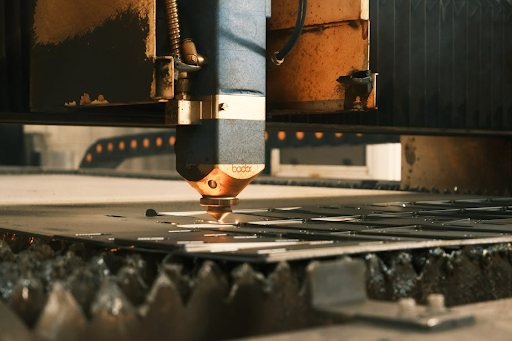
The industrial production of metal work has been ongoing for centuries. However, innovations in this area are causing this industry to move forward, and very quickly! Examples of advancements are: CNC plasma cutting and additive manufacturing, which are revolutionising the efficiency, accuracy and sustainability of metal fabrication.
CNC Plasma Cutting Advancements
Recent advances in CNC plasma cutting technologies are making this production method more available and easier to use in all types of workshop environments. A prime example of this is the availability of ultra-high definition plasma systems which are providing cut quality similar to that of laser cutting but at a much lower cost when creating thicker part types.
Another example of how these technologies are providing new ways to use CNC plasma technology is with the development of automatic nesting programs which greatly reduce the amount of material that is wasted during the fabrication process. An additional feature of these newly developed systems is that the automated height control system automatically changes the height of the plasma cutting torch during production as needed based on the specific requirements for achieving optimum cut quality on all types of work surfaces or part designs.
Laser Cutting Technology
More than any other area of metal fabrication, fibre laser cutting is dominating the industrial sector because it provides superior quality and speed of cut, as well as the ability to laser-cut metals such as brass and copper that conventional carbon dioxide lasers simply cannot cut. The latest fibre laser cutting systems incorporate features such as automated material handling systems, multi-pallet loading systems, and intelligent (dynamic) control of laser beam parameters for increased throughput and reduced set-up time.
Additive Manufacturing in Metal
Three-dimensional metal printing has gone from being primarily used for aerospace and medical production to being utilised in a wide range of industrial applications. Selective Laser Melting (SLM) and Directed Energy Deposition (DED) allow manufacturers to create complex 3D shapes that cannot be created using conventional machining processes. Additionally, these technologies allow for on-demand production of replacement parts, thus reducing the amount of extra parts kept in inventory and reducing lead times.
Robotic Welding and Automation
Robotic welding systems have become much smarter and more flexible. Collaborative robots (or Cobots) collaborate using the same space as a human operator without the need for safety barriers. Thus, robotic welding automation is more accessible to small businesses. Automated vision systems allow robots to adapt to real-time changes in weld seams to improve quality. In addition, automated grinding, polishing, and material handling functions continue the trend of replacing human labour and improving the quality of finished products.
Digital Twin Technology
A digital twin is a virtual reproduction of a physical product or entity that has been created in order to run simulations of how that physical entity will operate in a real-life environment, thus enabling manufacturers to optimise production flow prior to building anything physically. Utilising predictive analytics, digital twins support predictive maintenance for machines and equipment by allowing manufacturers to analyse data over time and identify when machines and equipment may need maintenance before they actually fail. As a result, the time lost due to machine or equipment failure will be dramatically reduced, and the process improvement cycles will be greatly accelerated.
Sustainable Metalworking Practices
Sustainability is becoming one of the key drivers of new product development in the metalworking industry. For instance, waterjet cutting does not create heat, thus producing zero fumes, which ultimately means less environmental pollution. Similarly, advances in plasma and laser cutting systems have allowed for much faster cutting speeds with a reduction in power consumption. Additionally, closed-loop coolant systems and metal swarf recycling programs are being adopted by all innovative companies within the metalworking industry.
Innovations in the metalworking industry, as well as those associated with CNC plasma cutting, will empower manufacturers to produce more products, waste less, and compete at a higher level. Manufacturers must adopt and utilise these technologies in order to remain competitive in this fast-paced manufacturing environment!
