
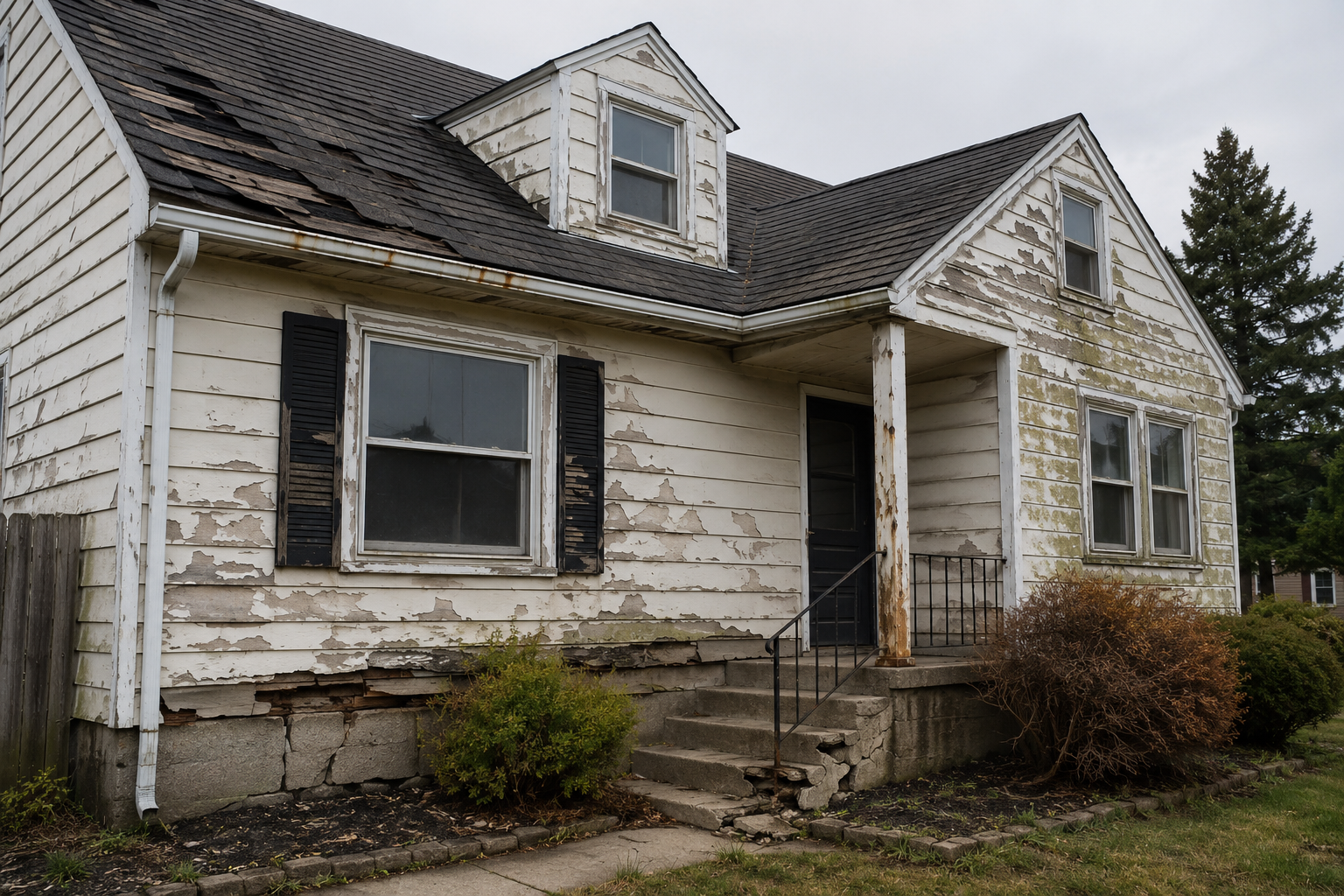
Plenty of houses look fine until you actually stop and look at them. The Australian climate doesn’t go easy on anything outdoors. Hot summers, rain that comes in sideways, the occasional hailstorm nobody asked for – your roof and walls wear it all. Sooner or later, even a well-built home starts to look its age. The annoying part is that the longer you leave the damage, the dearer it gets to fix.
Acting at the right time saves you money, and it spares you a fair amount of worry too. A few warning signs are obvious enough that you’d spot them from the driveway. Others are sneakier, slowly eating away at your comfort and your budget while you go about your week none the wiser. What follows is a rundown of the things worth keeping an eye on, so you can deal with the small stuff before it grows into something expensive.
The Visual Warning Signs You Can’t Ignore
Some problems don’t bother hiding. Peeling or flaking paint is about as common as it gets, and it’s not just an eyesore. Paint is doing a job back there. Once it lets go, the surface underneath has nothing protecting it, and your timber or render is left open to moisture and the odd hungry pest.
Cracked or warped siding deserves the same attention. Water finds those cracks, slips in behind the walls, and that’s where rot, mould, and structural headaches begin. The walls facing the worst of the weather usually give up first, so start your inspection there.
The roof is its own conversation, as experts like ELR Roofing will tell you. Tiles that are missing, cracked, or curling at the edges tell you the home’s main defence is wearing thin. Throw in sagging gutters, rusted flashing, or odd discoloured patches, and you’ve got a roof that needs proper attention. This kind of damage tends to snowball, so get someone up there for a look the moment something seems off.
The Subtle Signs That Often Go Unnoticed
A lot of trouble never shows its face on the street. Step inside, and you’ll find some of the clearest clues. A room that stays draughty whatever the season often means gaps somewhere – in the insulation, the cladding, or the seals around your windows. Those gaps let the air you’ve paid to heat or cool drift out while the outside air strolls in.
Your power bills can say the same thing in their own way. When the heating and cooling have to slog away just to keep the place comfortable, that effort usually points to energy escaping through the exterior. A bill that climbs for no reason you can name is worth a closer look.
Damp is the one to take most seriously. Stains creeping across a ceiling, paint lifting indoors, a musty smell you keep noticing but can’t pin down – these all suggest water is getting in. Leave it and the damage spreads into the structure, with mould tagging along to make things worse for the house and for whoever’s breathing the air. Catch it early, and you’re looking at a quick fix rather than a renovation.
Why Delaying Repairs Costs You More
Putting it off is easy. The damage seems minor, money’s tight, and it can surely wait another season. Trouble is, exterior faults don’t stand still. Today’s hairline crack is next winter’s structural problem. A handful of missing tiles turns into water tracking right through the house.
The maths is plain enough. Small repairs cost less than the big jobs that follow once you’ve ignored them. Repainting in good time beats replacing rotten timber. A patch on the roof beats a full replacement after months of leaks. Delaying doesn’t make the bill disappear – it just lets it grow.
Then there’s resale. A tidy exterior protects what you’ve put into the place and reassures anyone thinking of buying. Neglected homes pull lower offers and linger on the market.
Stay Ahead of the Damage
Staying ahead of it is the smart play. Regular checks let you catch faults while they’re still cheap. Wander around the property a few times a year, watch for both the obvious and the quiet signs, and don’t sit on anything that looks wrong.
Spotted a few of these already? A professional assessment will tell you what you’re really dealing with. A little attention now goes a long way!
