
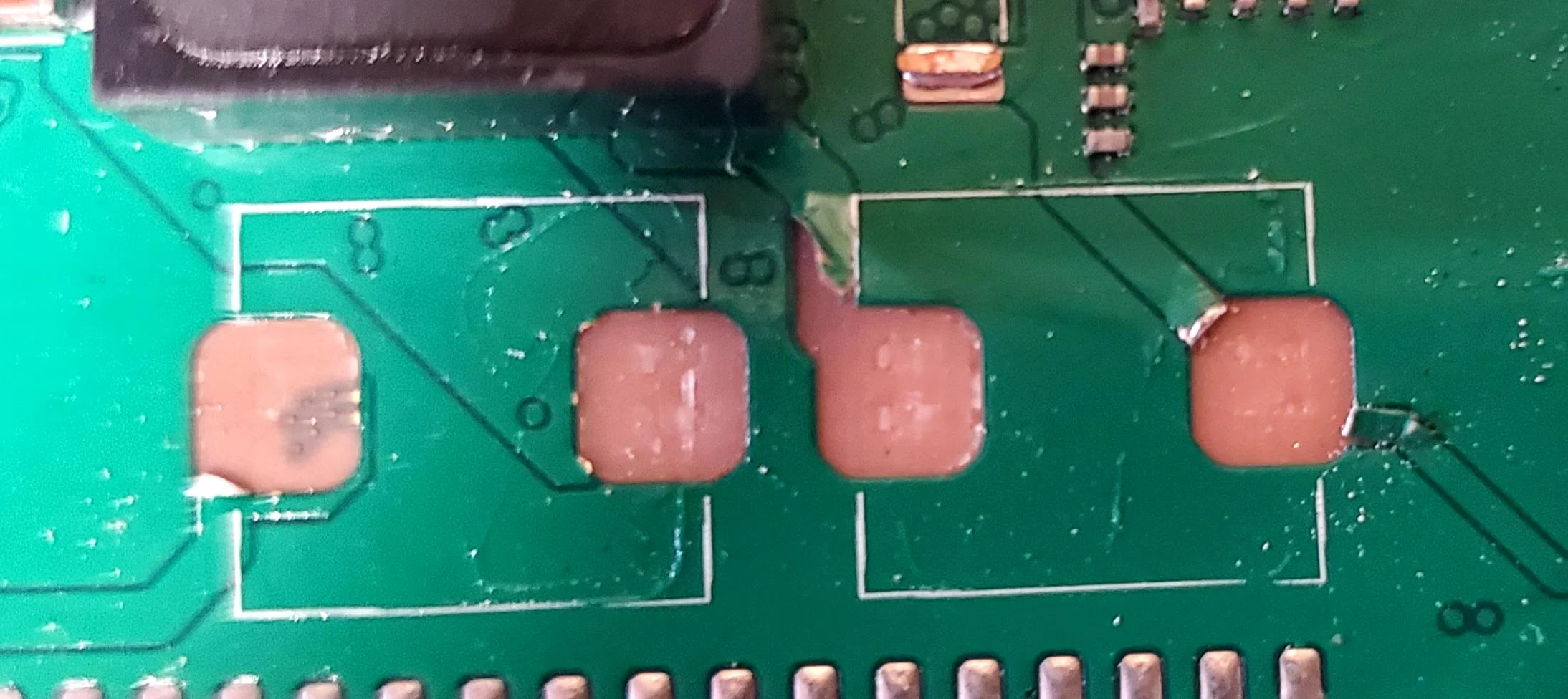
Damaged solder pads are typically caused by improper desoldering techniques or overheating; the detachment of copper traces can result in severed circuit connections—a common issue in high-precision devices such as mobile phones and laptops. Proper repair protocols require the use of jumper wires to re-establish signal pathways, combined with the application of UV green oil or UV-curable adhesive for insulation and structural reinforcement. By employing appropriate procedures, circuit connectivity can be restored without causing damage to surrounding components, thereby enhancing both the reliability and long-term stability of the repair.
Instrument Preparation and Setup
Before starting any restoration work, proper training is important as PCB restoration requires balance, temperature regulation, and clean running conditions First, ensure that the board is completely powered off and removed from any battery sources. Use isopropyl alcohol (99%) to lighten the damaged area and stop waste residue, dirt or oxidation. An anti-solid mat is recommended to prevent electrostatic discharge, which can damage sensitive components.
For tools, you may want a fine-front soldering iron set at 320°C to 350°C depending on board thickness, and use quality point tweezers (Erem or JBC fashion) for controlled heating and a hot-air rework station generally set at 280°C for precision gels, and without soldering leaving corrosive residue A microscope or at least a 10x magnification is specifically for observing a fine enameled wire and ensuring accuracy in all pad restoration operations .
Step-by-Step PCB Pad Repair Process
The first step in restoring a broken PCB pad is to carefully identify the proximity of the broken trace and confirm loss of continuity using a multimeter When indicated, lightly scrape the solder mask layer around the damaged pad Using a glass pen or precision blade indicate underlying copper. This step should be done slowly to avoid deep shrinkage in the panel layers. If you want to soften the adhesive or the surrounding coating, use a hot air conditioner and apply heat controlled at about three hundred°C.
Next, using a small amount of lead solder to tin the uncovered copper area and the impure flux, which improves bonding and reduces oxidation throughout the heating process This system is often cited in specialized pad treatment workflows, where accuracy determines long-term durability. After adjustment, make sure the surface is flat and firm so that the jumper connections or replacement pads can be securely assembled with no threat of loosening at some stage in the second assembly .
Jumper wire and flying wire techniques
Once the pad region is ready, electrical continuity is restored using the best conductor in the following stage. It is in this that first-class enamel wire will be especially useful because of its thin insulation and flexibility. Cut a small piece of cord and tape both ends well and use a heat insulator or burn the toothpaste gently with the tip of a soldering iron. This allows proper solder adhesion without adversely affecting the cord structure.
Now install the flying yarn connection between the original trace point and the component terminal or close it with a valid pad. Use a temperature-controlled iron in the 330°C range to stabilize each end by applying a small amount of flux. Make sure the wire is flat and not under the worry of breaking the fabric. This process is widely used in microelectronics repairs because it restores functionality without the need for full PCB replacement, especially in compact mobile and healthy board designs .
UV solder mask and UV curing green coating applications
Protection of the treated space is essential for long-term durability after electrical restoration. This is where UV solder mask material comes into play. Apply a thin coat of UV-curable untested coating to treated lines and solder joints to treat insulation and mechanical strength. Make positive the coating is stripped evenly without bubbles or cubic accumulation, as well as the flexible layers may aim to cure discrepancies.
Usually use a UV curing lamp with wavelengths between 365nm and 405nm and expose the area of lined for 2 to 5 minutes depending on the manufacturer’s orders. This system hardens the protective layer, preventing oxidation, moisture damage, and unintentional short circuits. In advanced treatment workflows, this step is considered an essential insulation treatment step to ensure that the board behaves like new on the production unit after restoration and maintains strong long-term performance.
Conclusion
PCB pad repair requires patience, precision tools, and an understanding of thermal dynamics and material properties. By employing fly-wiring techniques in conjunction with UV-curable protective coatings, even severely damaged pads can be restored—re-establishing both electrical connectivity and structural integrity—thereby enhancing overall stability and reliability. Adhering to standardized procedures avoids the cost of replacing the entire board; in the repair of consumer electronics and industrial equipment, this significantly boosts success rates, minimizes the risk of rework, and ultimately extends the overall service life of the device.
