
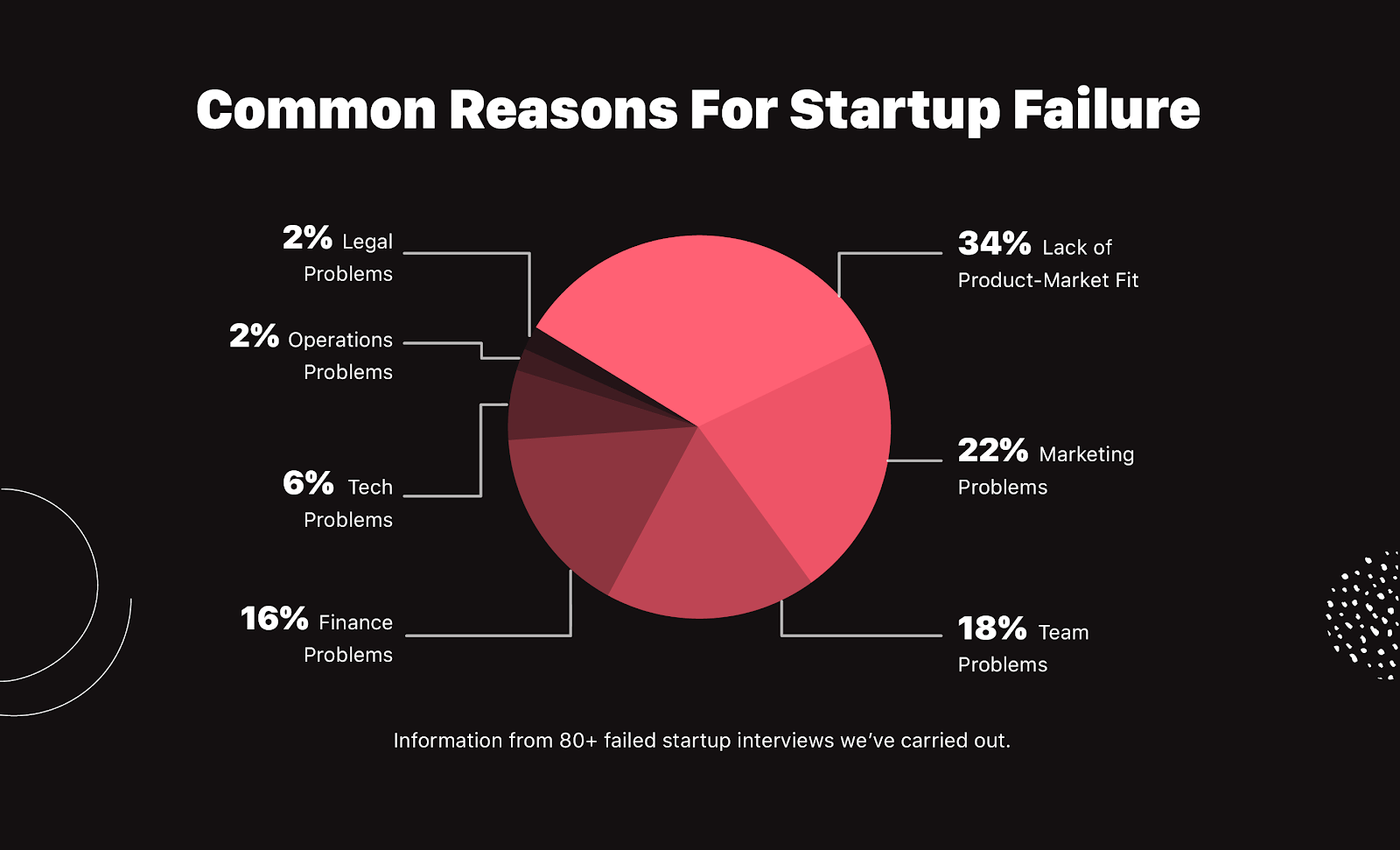
Most startup products do not fail because the idea was terrible.
They fail because people stop using them.
That is the real problem.
Founders often blame timing, competition, funding, or marketing. Those issues matter. But many products collapse for a simpler reason.
They confuse users.
The launch looks exciting. The demo looks polished. The roadmap sounds ambitious.
Then adoption stalls.
Users disappear quietly.
Why Startup Products Struggle After Launch
The Product Solves the Wrong Problem
Many startups build products around assumptions instead of behavior.
A founder believes a feature sounds useful. The engineering team builds it quickly. Investors get excited.
Then users ignore it.
A CB Insights report found that 35% of startups fail because there is no market need for the product. That usually means one thing.
The product solved a problem people did not care enough about.
One software founder admitted this after launch:
“We built an advanced reporting system. Users only wanted faster approvals.”
Months of work missed the real pain point.
Users Feel Overwhelmed
Some startup products launch with too many features.
Too many tabs. Too many settings. Too many options.
People open the platform once and feel lost.
A user once described a new project management tool this way:
“It looked like a cockpit. I needed instructions just to make a task.”
That reaction kills adoption fast.
People want tools that feel obvious.
Why Clarity Matters More Than Complexity
Simpler Products Win More Often
Many successful products became popular because they simplified existing workflows.
They removed steps.
They reduced friction.
A Forrester study found that improving user experience can increase retention rates by over 20%.
Retention matters more than launch excitement.
John Haber Montreal has often emphasized that products grow faster when teams remove unnecessary decisions for users. Simplicity improves confidence.
Confident users return.
Onboarding Defines Everything
The first few minutes decide whether people stay.
If setup takes too long, users leave.
If instructions feel confusing, users leave.
If the value is unclear, users leave.
One startup shortened onboarding from seven steps to three. Activation rates improved almost immediately.
Small friction points matter.
Internal Problems Become Product Problems
Unclear Teams Build Unclear Products
Product confusion usually starts inside the company.
Leadership lacks focus. Messaging changes constantly. Priorities shift weekly.
The product reflects that instability.
One startup team built three overlapping features because departments were not aligned.
Customers became confused about what the product actually did.
Internal clarity shapes external clarity.
Feature Creep Destroys Focus
Feature creep happens when startups keep adding instead of refining.
Every customer request becomes another feature.
Eventually the product loses identity.
One founder described the moment they realized this problem:
“We had built so many tools that nobody on our team could explain the homepage in one sentence.”
That is a warning sign.
The Role of User Feedback
Startups Often Ignore Real Behavior
Surveys matter. Analytics matter.
But watching users matters more.
One founder watched a customer try to upload a file into their platform. The user clicked the wrong button three times.
The button label sounded clever internally. It confused everyone outside the company.
They renamed it using plain language. Support tickets dropped the next month.
Tiny changes matter.
Feedback Should Be Continuous
Many startups collect feedback only before launch.
Bad idea.
Products evolve. User behavior changes.
Teams should ask regularly:
- What feels confusing?
- What slows you down?
- What feature do you avoid?
Honest answers reveal hidden friction.
Why Products Fail Even With Strong Marketing
Marketing Can Create Curiosity
It cannot create retention.
Some startups launch with strong branding and impressive campaigns.
People sign up.
Then they disappear.
Because the experience does not match the promise.
One user explained why they abandoned a productivity app after two days:
“The ad made it look simple. The product felt like homework.”
That gap destroys trust.
Retention Is the Real Metric
Founders often celebrate downloads and traffic.
Those numbers mean little if users leave quickly.
Strong products focus on:
- Weekly active users
- Repeat usage
- Task completion rates
- Retention over time
Usage reveals truth.
How Startups Can Avoid Post-Launch Failure
Solve One Problem Extremely Well
Do not solve ten problems badly.
Choose one clear pain point.
Build around that.
If users cannot explain the product quickly, simplify it.
Remove Features Aggressively
Audit features every quarter.
Ask:
- Does this help users directly?
- Does anyone actually use this?
- Does this create confusion?
If the answer feels weak, cut it.
One startup removed five underused features from its dashboard. Engagement improved because the product felt easier to navigate.
Subtraction creates clarity.
Watch Real Users Interact With the Product
Do not guide them.
Observe silently.
Where do they pause?
Where do they hesitate?
Where do they get frustrated?
Behavior exposes problems faster than meetings do.
Improve Internal Communication
Product quality depends on team alignment.
Clear priorities matter.
Defined ownership matters.
Consistent messaging matters.
If teams are confused internally, customers will feel it externally.
Why This Matters More Today
Software development moves faster than ever.
AI tools accelerate production.
Startups can build products quickly now.
That means usability becomes the real advantage.
People already feel overloaded by apps, notifications, and workflows.
The products that win will reduce stress.
Not increase it.
A Simple Post-Launch Review Process
Every startup should review these monthly:
- Top user complaints
- Most abandoned workflows
- Feature usage rates
- Support ticket themes
- Onboarding completion rates
Patterns appear quickly.
Fix friction early.
Final Thought
Startup products rarely fail because of one dramatic mistake.
They fail slowly.
Users stop logging in.
Teams keep adding complexity.
Confusion grows quietly.
The products that survive are usually simpler than competitors expect.
They respect people’s time.
They solve clear problems.
And they remove friction every chance they get.
That is what users remember after launch.
